Authored by
Research Matters

IIT Palakkad study shows how different indices used to predict drought combined with effects fof climate change can lead to different climate predictions for the future
IIT Palakkad study shows how different indices used to predict drought combined with effects fof climate change can lead to different climate predictions for the future

Study by researchers from Institute of Public Health, Bangalore investigate how successful Primary healthcare Centres are for treating non-communicable diseases like diabetes and hypertension. They find many loopholes in the healthcare delivery system.

The excruciating pain of having a failed organ and the grim chances of replacing it is a struggle of millions of patients across the globe. A ground-breaking discovery in this field, is giving a whole new definition to having one’s own personal organ! This discovery is none other than tissue engineering -- a science that has changed the face of organ transplant.
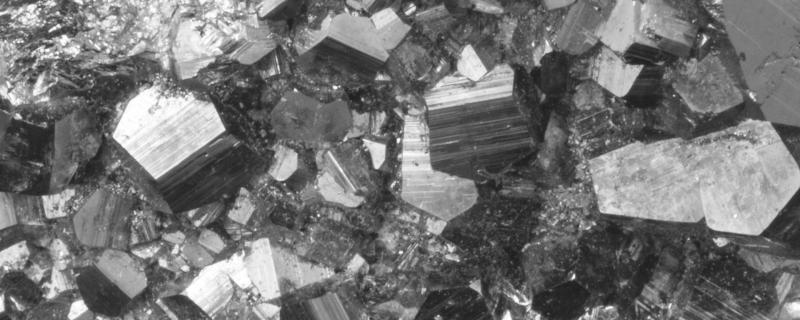
Researchers from Indian Institute of Technology Indore have demonstrated a new, ultrasensitive glucose sensor, made of nanopetals of Nickel Oxide (NiO). The new device has shown robustness and very high sensitivity, while utilizing very little power.
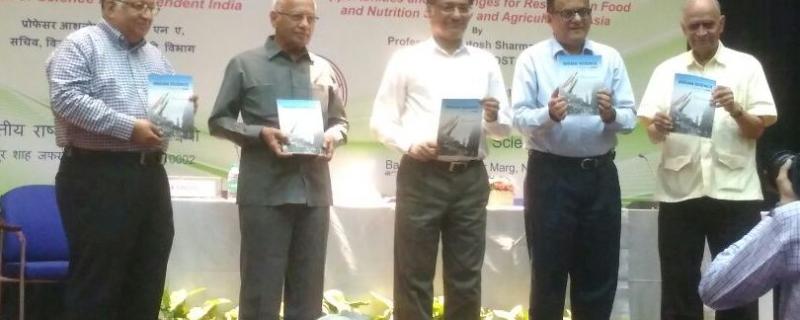
In a ceremony held on the 25th of April, 2018, in New Delhi, the Indian National Science Academy (INSA) has released a new book entitled "Indian Science: Transforming India. Impact of Science in Independent India". The book is a compilation of interesting stories about some of the significant developments in the field of science and technology in the country, and their remarkable impact on the society.
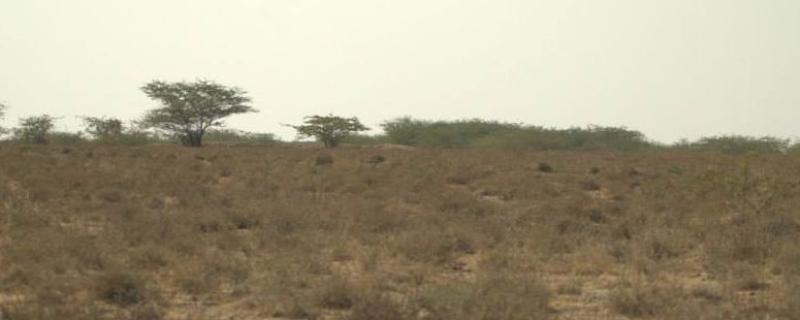
Are grasslands and deserts wastelands? How are these ecosystems affected by change in land use due to humans? In a recent study, researchers study these complex ecosystems to understand crucial transition points for the system, after which it cannot revert back to its original state.

In the past century, fossil fuels like petrol and diesel have powered our vehicles, machines and in fact, our world! But the era of these fuels is coming to an end; all our petroleum reserves are soon ending, and the increasing pollution due to these fuels is making the world sick. Now, our hope lies in biofuels—fuels produced by organic wastes that are renewable and eco-friendly, unlike fossil fuels.
Researchers from the Indian Institute of Technology Indore, India; University of North Texas, USA and the National Institute of Technology Goa, highlight how changes made to patent policy in 2005 have boosted research and development in the country.
Scientist from Indian Institute of Technology (India School of Mines), Dhanbad, Jharkhand are studying the potential environmental risks and hazards of coal ash, by studying the composition of the by product.

In a step that could ease some tension about India's Neutrino Observatory, the Indian National Science Academy (INSA), the National Academy of Sciences (NAS) and Indian Academy of Sciences (IAS) have issued a joint statement supporting the India-based neutrino observatory to be set up in Bodi West Hills in Theni district of Tamil Nadu.